



A Clinician's Guide to W&H Dental Equipment & Technology
For dentists, dental students, and distributors, the name W&H Dental is synonymous with precision, reliability, and innovation in dental technology. For over a century, the Austrian manufacturer has established itself as a cornerstone of modern dentistry, producing instruments that are integral to daily clinical practice.
W&H tools are the workhorses in countless practices worldwide, powering everything from routine restorative procedures to the most demanding implant surgeries. This guide provides an educational overview of their systems, focusing on the clinical advantages and practical applications relevant to high-performance implant dentistry.
The Foundation of Clinical Excellence
Viewing W&H Dental equipment as individual tools misses the broader picture. Their product lines are engineered as an integrated system—an ecosystem where each component works synergistically to optimize clinical outcomes and practice efficiency.
From their iconic restorative handpieces and powerful surgical motors to their essential sterilisation units, every product reflects a commitment to ergonomic design, long-term durability, and smart technology. This guide serves as a practical resource for leveraging W&H equipment, covering core product lines, maintenance protocols, and workflow integration to inform purchasing decisions and maximize return on investment.
Key Pillars of the W&H Philosophy
- Precision Engineering: W&H instruments are renowned for meticulous build quality. This translates to consistent torque, minimal vibration, and predictable performance, which are critical during delicate procedures like osteotomies and implant placement.
- Patient and User Safety: Integrated features like advanced cooling systems, brilliant LED illumination, and validated sterilisation compatibility are standard. These elements are designed to protect both patients and the clinical team from procedural risks.
- Integrated Workflow: W&H equipment is designed for interoperability. A surgical motor, for example, is engineered for seamless compatibility with a range of systems, including the versatile Alfa Gate implant systems, ensuring predictable results and streamlined surgical protocols.
When clinicians master their tools, the equipment becomes a true extension of their skill, enhancing precision and clinical confidence. A reliable surgical motor is not just a device but a key component in achieving predictable osseointegration.
A practice built on dependable technology is prepared for any clinical challenge. For a deeper understanding of building a high-tech practice, explore our article on the complete digital workflow in implantology. For those interested in bringing these foundational technologies to clinics, we invite you to become a distributor.
Core W&H Product Categories for the Modern Practice
The W&H Dental portfolio is engineered to support every stage of a clinical procedure. The company structures its products into distinct categories: Restorative & Prosthetics, Oral Surgery & Implantology, and Hygiene & Maintenance. This organization allows clinicians to select the ideal instrument for each specific task, from initial tooth preparation to the final sterilisation cycle.
This systematic approach ensures that practitioners have access to a comprehensive toolkit designed to work in harmony, creating a seamless and efficient workflow for any modern dental practice. The following flowchart illustrates how this integrated ecosystem enhances both clinical outcomes and operational efficiency.
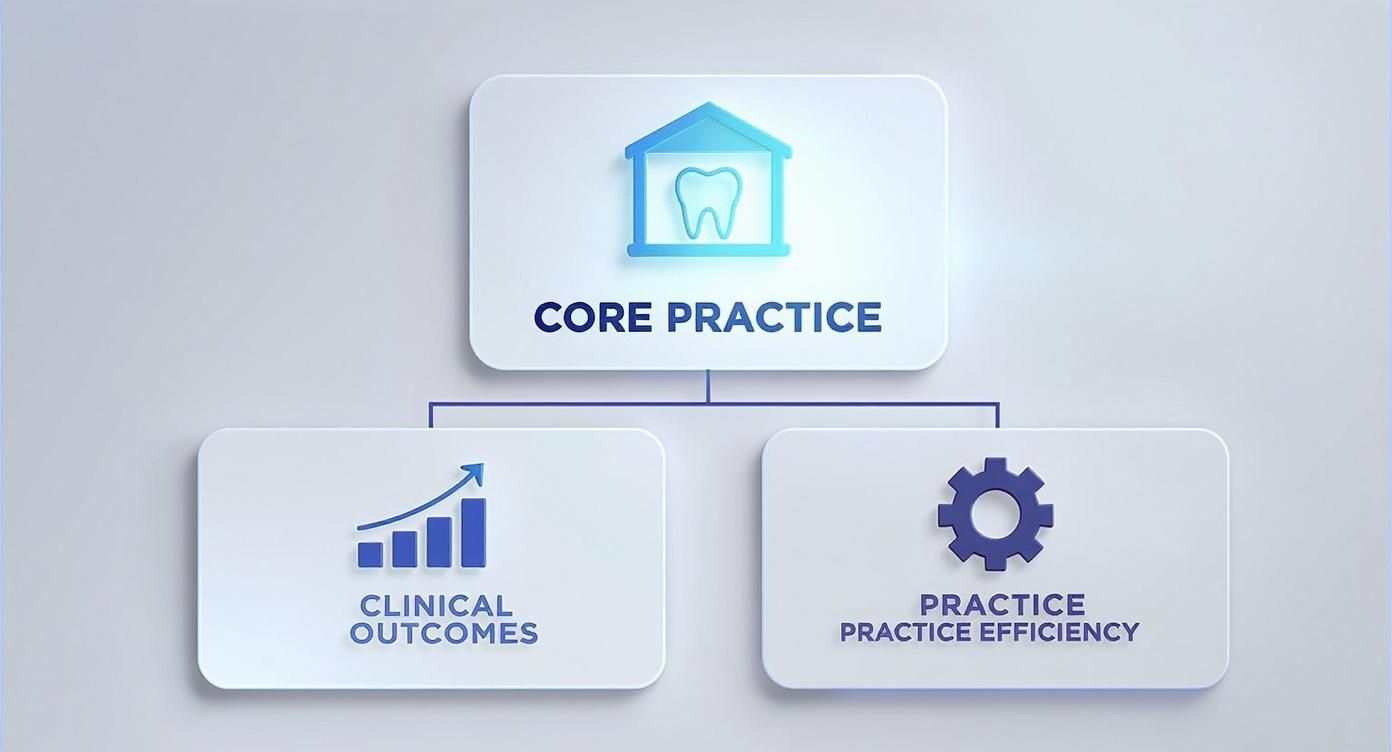
As shown, the right core equipment directly impacts the quality of patient care and the efficiency of practice operations.
W&H Dental Product Lines at a Glance
This table breaks down each category, its primary clinical application, and a standout technological feature, helping clinicians and distributors pinpoint the right tools for their specific needs.
| Product Category | Primary Clinical Application | Key Technological Feature |
|---|---|---|
| Restorative & Prosthetics | General dentistry, crown preparations, caries removal, finishing | LED+ illumination for daylight-quality light, multi-spray cooling systems for tissue protection |
| Oral Surgery & Implantology | Implant placement, bone surgery (e.g., sinus lifts), extractions | Precise torque and speed control, piezoelectric technology for atraumatic bone cutting |
| Hygiene & Maintenance | Instrument cleaning, lubrication, sterilisation | Automated maintenance cycles, class B autoclaves for validated sterilisation processes |
This overview demonstrates how W&H provides a comprehensive solution, from the initial osteotomy to the critical final step of ensuring every instrument is sterile.
Restorative and Prosthetic Handpieces
These handpieces are the workhorses of any dental practice. W&H offers both air-driven (turbine) and electric motor systems. Air-driven turbines are excellent for bulk enamel reduction, providing high speed and tactile feedback.
Electric motor systems, in contrast, deliver constant, predictable torque even at low speeds. This precision is invaluable for delicate work, such as caries removal near the pulp or refining crown margins. Many W&H handpieces feature LED illumination and multi-spray cooling to enhance visibility and protect dental tissues.
Surgical and Implantology Units
For specialized procedures, W&H provides powerful surgical motors like the Implantmed and Piezomed. These units are the centerpiece of any oral surgery or implantology suite where precision and patient safety are paramount.
- Implantmed: This surgical motor is engineered for placing dental implants. It provides exact control over torque and speed and includes a documentation feature to record placement parameters—essential for quality assurance and patient records.
- Piezomed: This unit utilizes piezoelectric technology for bone surgery. It enables precise, atraumatic bone cutting while protecting adjacent soft tissues, a significant advantage in procedures like sinus lifts or ridge splitting.
These systems are designed for compatibility with a wide range of implant systems, including options like the M+ Conical Connection implants from Alfa Gate, ensuring seamless integration from surgical planning to final placement.
The ability to program a surgical motor with the exact parameters for a specific implant system is not just a convenience; it is a critical step in achieving predictable osseointegration and long-term implant stability.
Hygiene and Maintenance Equipment
Protecting an investment in high-quality instruments requires meticulous care. The W&H Hygiene & Maintenance category includes autoclaves and automated maintenance units like the Assistina. These systems ensure handpieces are cleaned, lubricated, and sterilised according to manufacturer specifications, which extends their lifespan and is crucial for patient safety. Our article on instrument sterilisation best practices offers a deeper analysis of these protocols.
By understanding these core product areas, clinicians and distributors can make informed decisions to equip a practice for both daily procedures and advanced surgical challenges. To explore how the right equipment can elevate your practice, Contact an Alfa Gate specialist to discuss your clinical needs.
Optimizing Maintenance and Sterilisation Protocols
High-precision dental instruments are a significant investment. Protecting that investment and ensuring patient safety depends on a meticulous and validated maintenance and sterilisation process. For sophisticated W&H dental equipment, the quality of this routine directly impacts performance, longevity, and regulatory compliance.
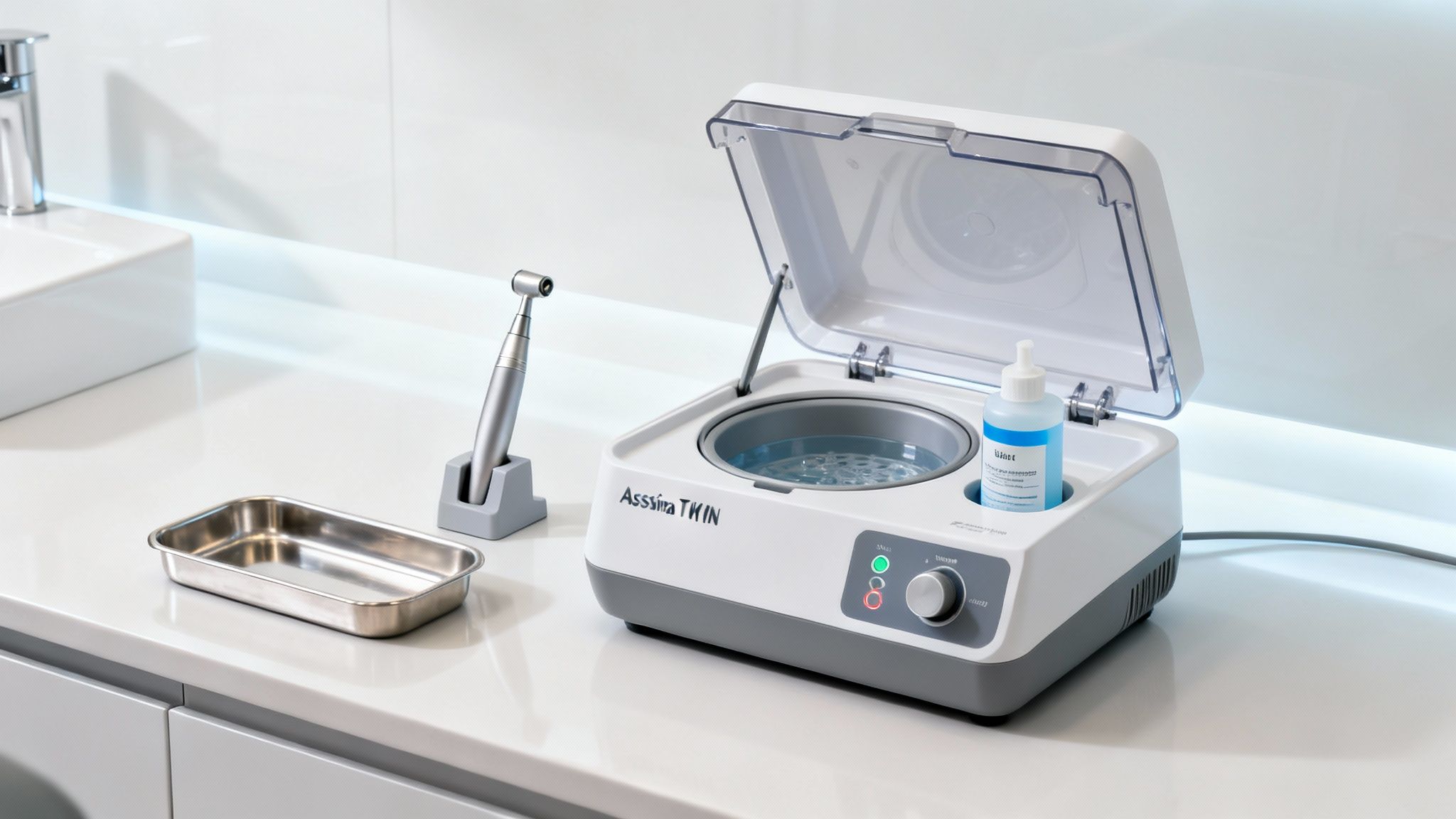
The standard of care is shifting from inconsistent manual cleaning to automated, validated processes. Manual cleaning is susceptible to human error, whereas an automated unit guarantees that every instrument receives the same precise treatment, every time.
The Clinical Case for Automated Maintenance Units
Devices like the W&H Assistina TWIN standardize instrument reprocessing. These units deliver a measured dose of cleaning solution and lubricant, ensuring all internal channels are flushed and protected before sterilisation. This is far superior to manual lubrication, where under- or over-application is common.
A properly maintained handpiece ensures clinical precision. Correct lubrication guarantees consistent torque and reduces bur chatter, leading to cleaner preparations and an improved patient experience.
Automated systems are also highly effective at removing bioburden from the intricate internal channels of a handpiece. This is a critical prerequisite for effective sterilisation, as residual contaminants can shield microorganisms from steam penetration in the autoclave.
A Validated Sterilisation Workflow
A reliable sterilisation workflow is non-negotiable in modern dentistry. It begins the moment an instrument is removed from the patient's mouth and concludes when it is stored sterile. Adhering strictly to manufacturer's guidelines is essential for patient safety and equipment longevity.
Here is a clear, actionable workflow for your practice:
- Chairside Pre-Cleaning: Immediately after use, wipe the exterior of the handpiece to remove visible debris. Run the handpiece to expel residual water from the air and water lines.
- Automated Cleaning & Lubrication: Process the instrument in a dedicated maintenance unit to perform internal cleaning and lubrication.
- Bagging & Sealing: Place the cleaned and lubricated handpiece into a sterilisation pouch, ensuring a proper seal to maintain sterility post-cycle.
- Autoclaving: Run a validated Class B autoclave cycle using the precise time, temperature, and pressure settings recommended by W&H for the specific instrument.
- Sterile Storage: Store sterilised pouches in a clean, dry area protected from potential contamination.
By implementing a disciplined and automated maintenance routine, your practice can significantly reduce the risk of cross-contamination, prevent costly repairs, and ensure your W&H dental equipment performs optimally for years.
Ensuring Seamless Integration in Your Practice
A dental practice operates as an integrated ecosystem, not a collection of standalone tools. When introducing new W&H Dental equipment, its true value is measured by how well it integrates with your existing setup. Proper integration leads to a more efficient clinic and prevents workflow disruptions.
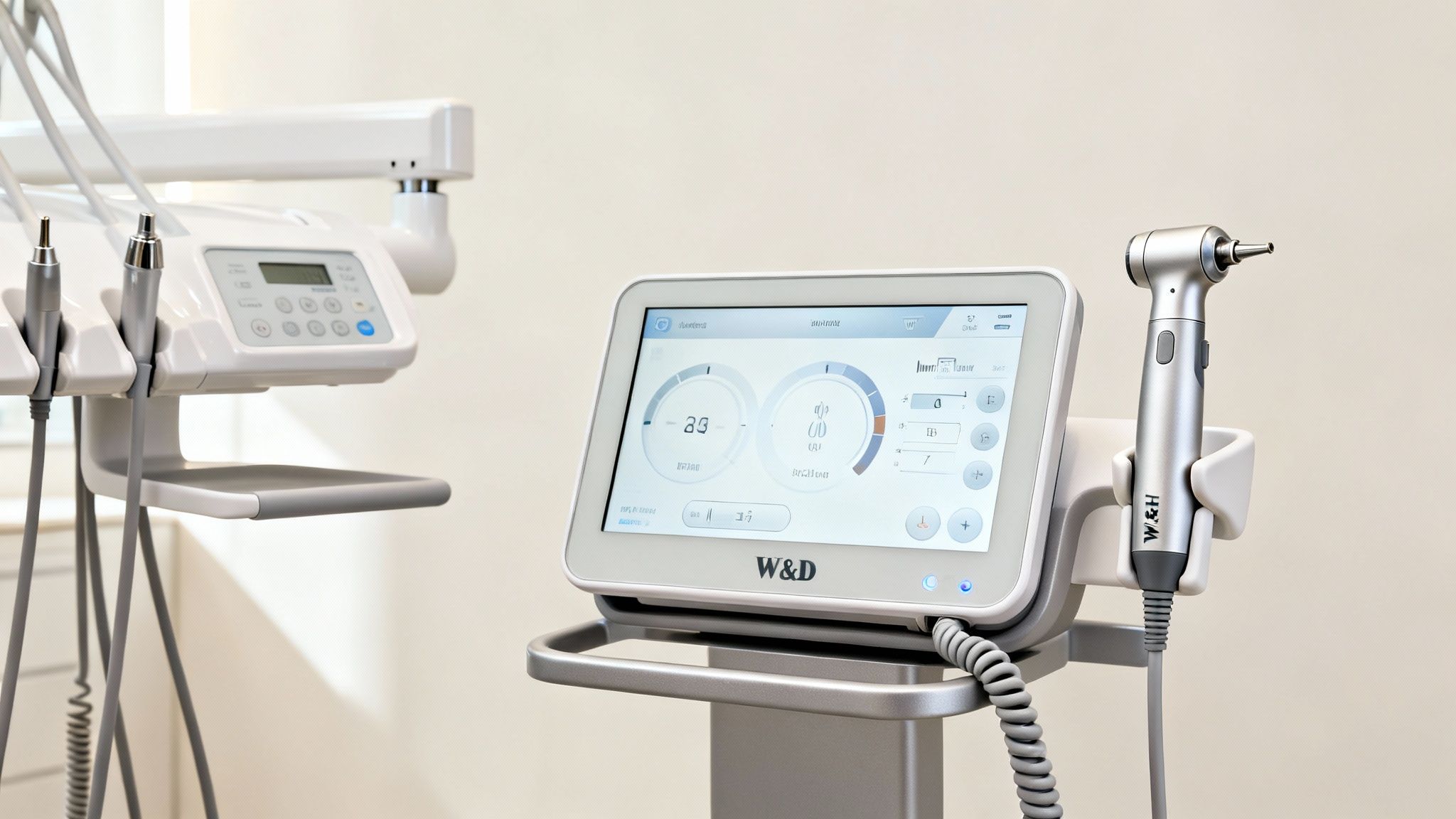
The process begins with physical compatibility. Before any purchase, verify connection types, whether it is a standard ISO E-type or a brand-specific coupling. Ensuring a new handpiece connects to your dental unit's delivery system is a foundational step.
Beyond Physical Connection: Clinical Synergy
True integration extends beyond physical connections; it requires that all technologies work in concert to deliver predictable, high-quality patient outcomes. This is especially critical in implant dentistry, where multiple systems must synchronize perfectly.
For example, a high-performance surgical motor like the W&H Implantmed must be precisely calibrated for the specific implant system in use. Whether you use Alfa Gate implants or another system, the motor’s torque and speed settings must align with the manufacturer’s surgical protocol to achieve optimal primary stability and promote successful osseointegration.
Achieving Workflow Cohesion
The ultimate goal is workflow cohesion, where instruments and software from different manufacturers function together without friction. This creates a seamless pathway from diagnosis and planning to final restoration.
The most advanced surgical motor is only as effective as its compatibility with the entire clinical workflow. When equipment is properly integrated, the technology fades into the background, allowing the clinician to focus entirely on the patient and the procedure.
Before investing, consider the entire procedural chain. How will a new surgical motor interface with your treatment planning software? Do its documentation features integrate with your patient record system? Answering these questions is key to building a connected practice. Understanding how each component contributes to the complete digital workflow is what differentiates a good clinic from a great one, leading to enhanced precision and patient care.
How to Choose the Right Dental Equipment
Selecting the right equipment for a dental practice is a strategic decision that extends beyond the initial purchase price. Investment in technology should be driven by factors that enhance clinical success, improve efficiency, and deliver long-term value.
This requires a clear set of criteria for every potential acquisition, focusing on clinical need, performance, ergonomics, reliability, and the total cost of ownership. An objective framework ensures you select the best-fit technology for your specific procedures and patient demographics. This is particularly important when evaluating a foundational piece of equipment like a surgical motor for implantology.
Defining Your Core Clinical Needs
First, identify the specific clinical problem you aim to solve. Are you expanding services? Is current equipment causing workflow bottlenecks or frequent failures? A clear definition of your primary need prevents distractions from features you may never use.
- Procedure-Specific Requirements: For implant placement, non-negotiable features include precise torque control, stable speed regulation, and robust documentation capabilities.
- Versatility vs. Specialisation: Determine if you need a single versatile unit for multiple applications or a dedicated device optimized for one task.
- Patient Volume: The volume and complexity of cases you manage will dictate the required durability and performance level of your equipment.
A Framework for Objective Evaluation
Once your needs are defined, create an evaluation scorecard to compare options objectively. This data-driven approach should balance several key factors to assess the true value of the investment.
The best dental equipment is not always the one with the most features. It is the one that integrates seamlessly into your workflow, enhances clinical precision, and functions reliably day after day.
When comparing surgical motors, for example, evaluate the ease of programming protocols for different implant systems, such as those from Alfa Gate. An integrated workflow where the motor's parameters match the implant's requirements is critical for achieving predictable osseointegration.
Looking Beyond the Initial Purchase
Finally, consider the total cost of ownership. This includes not only the initial price but also maintenance costs, consumables, warranty terms, and the availability of technical support. A cheaper unit requiring frequent, expensive repairs is not a sound long-term investment.
Investigate the manufacturer’s reputation for reliability and customer service. A strong support network can be as valuable as the equipment itself, ensuring that any issues are resolved quickly to minimize practice disruption. This criteria-based approach enables you to build a practice equipped for both clinical excellence and long-term financial stability.
Understanding Warranty and Support Options
The relationship with a manufacturer like W&H Dental is a long-term partnership that begins after the purchase. The warranty and support services are critical components of your practice's operational stability, protecting your investment for years.
It is important to recognize that warranty terms vary. The coverage for a high-torque surgical motor will differ from that for a restorative handpiece. Always review the specific terms for each piece of equipment to understand what is covered (e.g., defects in materials or workmanship) and the duration of the coverage.
Navigating Service and Repairs
When equipment requires professional service, knowing the correct protocol is essential. Your first point of contact should always be an authorized dealer or the official manufacturer service center. Using unauthorized third-party repair services can void your warranty and may lead to improper repairs.
A practical tip is to maintain a log of purchase dates and serial numbers. This information is typically the first thing a support team will request and having it readily available streamlines the service process.
The value of manufacturer-led training cannot be overstated. Proper initial training can prevent many common user errors that lead to equipment damage, effectively serving as the first line of defence in maintaining your investment.
The Value of Clinical and Technical Support
Support extends beyond repairs. The clinical and technical guidance provided by manufacturers is an invaluable resource. This can range from troubleshooting an error code over the phone to comprehensive hands-on training for your team. This is particularly crucial when integrating new technology, such as a surgical system for placing Alfa Gate’s Bioactive implants.
By understanding your warranty and leveraging the available support network, you can ensure smooth and efficient practice operations. If you have questions about integrating new systems or wish to discuss your options, please contact our team of experts.
Answering Your W&H Dental Equipment Questions
Clinicians and practice managers often have practical questions when selecting the equipment they rely on daily. Here are answers to some of the most common queries regarding W&H Dental products.
What is the difference between W&H handpiece lines?
A frequent question involves choosing between W&H handpiece series like Synea and Alegra. These lines represent different performance tiers designed for specific clinical applications.
The premium Synea line is engineered for demanding procedures, featuring superior titanium construction, bright optics, and durable ceramic bearings. The Alegra series, by contrast, offers a reliable and ergonomic solution for everyday restorative work. The optimal choice depends on your practice's clinical focus and budget.
Is W&H equipment compatible with other implant systems?
Compatibility is a key concern for clinicians. For instance, an Alfa Gate implant system can be used with a W&H Implantmed motor.
The Implantmed is a versatile surgical motor designed for universal compatibility. It allows users to program custom drilling sequences with the precise torque and speed required by different implant systems. To place an Alfa Gate implant, you simply input the recommended surgical parameters into the motor, and you are ready to proceed.
What is the recommended maintenance frequency for handpieces?
The manufacturer's recommendation is to process every handpiece through a maintenance unit after every single patient use and before each sterilisation cycle.
Adhering to this protocol consistently is the most effective way to protect your investment, ensure reliable performance, and uphold the highest standards of infection control. This topic is covered in greater detail in our guide to instrument sterilisation.
At Alfa Gate, we understand that exceptional clinical outcomes rely on equipment that integrates flawlessly. If you have further questions or want to explore how our implant systems can enhance your practice, we encourage you to connect with our team of specialists or become a distributor.